Research

Dr Escribano's research addresses three questions: how to design mechanisms for transport systems run by many operators, how to make adaptive decisions when networks are disrupted, and how to build learning methods that can be trusted in safety-critical operations. The work is applied across humanitarian operations, emergency response, airspace management, logistics and autonomous fleets.

Research Areas

See all publications

Mechanism Design for Multi-Operator Systems

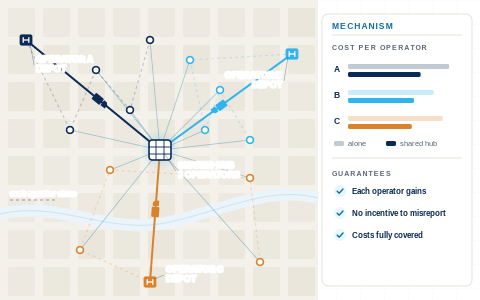
Transport services are increasingly run by many operators sharing the same roads, airspace and customers, each pursuing its own objectives. This work designs the rules, incentives and coordination mechanisms that make such systems efficient as a whole, and measures what is lost when operators compete instead of collaborating.

See 2 projects in this area
Collaboration mechanisms
Decentralised mechanisms with performance guarantees for carriers sharing last-mile delivery.
Cost of competition
The inefficiency created by competing delivery operators on urban roads.
Customer and operator behaviour
Game-theoretic and machine learning models of how customers choose between delivery services.
Policy and strategy
Evaluating operating policies for autonomous ridesharing and mixed fleets.
Adaptive Decision-Making for Disrupted Networks

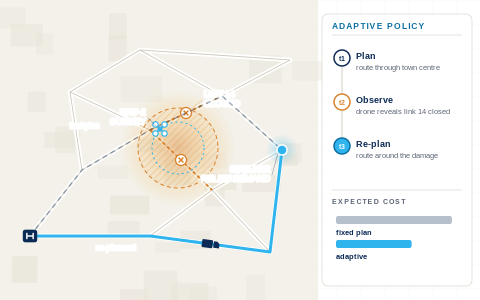
Disasters, severe weather and failures change transport networks faster than plans can anticipate. This work develops sequential decision methods that adapt as conditions are revealed, including decisions that themselves determine what is learnt about the disruption, and scales them to realistic networks.

See 5 projects in this area
Decision-dependent uncertainty
Endogenous stochastic optimisation, where surveys by drones shape what is known about damage.
Multi-stage planning at scale
Stochastic dual dynamic programming, warm-started with learnt value functions.
Real-time control
Reinforcement learning for dynamic airspace sectorisation and fleet dispatching.
Network resilience
Assessing and restoring the performance of air traffic and evacuation networks under disruption.

Knowledge-Informed Learning for Safety-Critical Operations

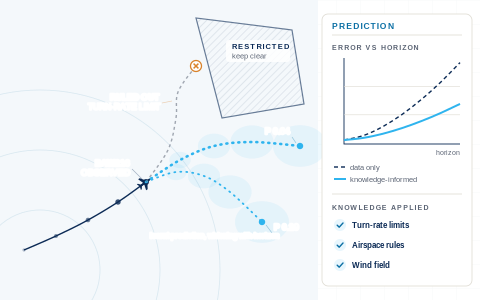
Where errors are costly, predictions must be reliable and explainable as well as accurate. This work combines machine learning with physical, operational and behavioural knowledge to predict trajectories, weather and risk, and uses these predictions to assess and manage safety in manned and unmanned operations.

See 3 projects in this area
Trajectory prediction
Risk-aware and multimodal prediction for aircraft, drones and autonomous vehicles.
Weather for operations
Wind-speed and thunderstorm forecasting for pre-tactical air traffic management.
Safety assessment
Agent-based risk models and target levels of safety for unmanned aircraft.
Human behaviour
Interactions between autonomous vehicles and pedestrians, and between drones and evacuees.

Application Domains

Humanitarian Operations

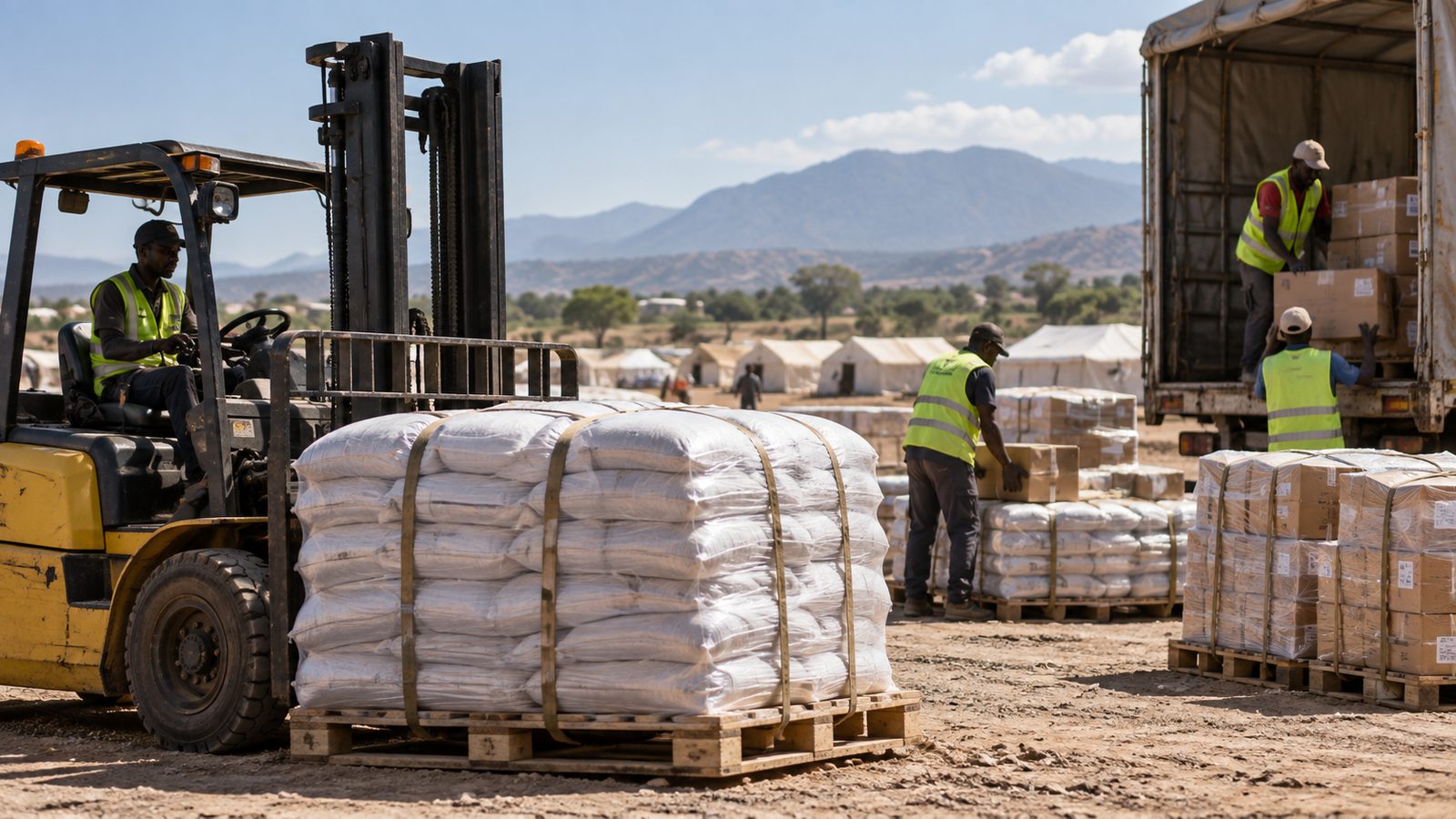
Optimising the distribution of relief and medical supplies after disasters, by ground vehicles and drones.

  • Relief distribution
  • Medical logistics
  • Drone delivery
  • Planning at scale

Emergency Response and Infrastructure Recovery

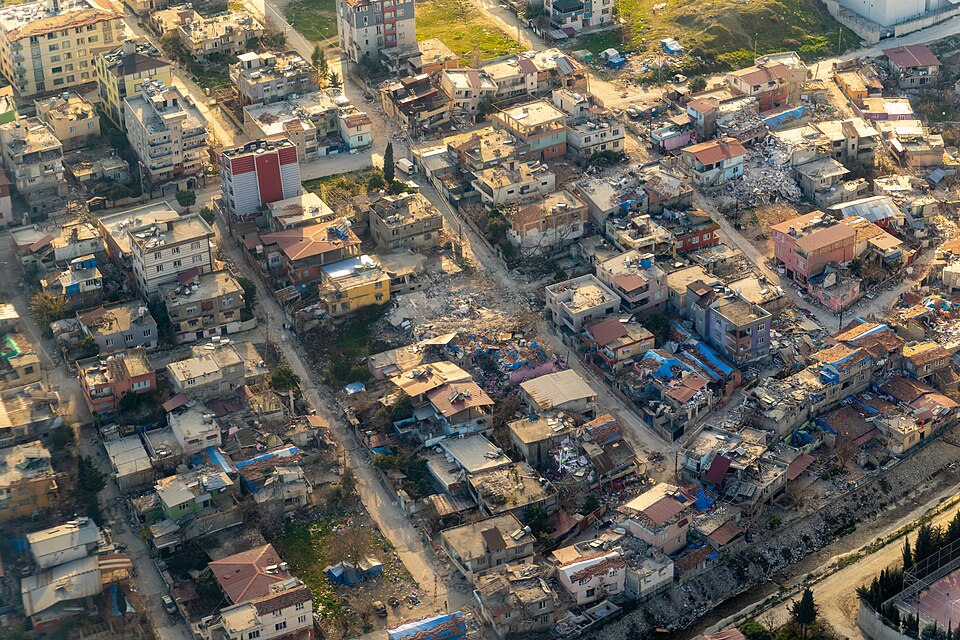
Planning the hours and weeks after a disaster, from evacuating people to assessing damage and restoring networks.

  • Evacuation planning
  • Damage assessment
  • Network restoration
  • Behaviour under emergency orders

Manned and Unmanned Airspace Management

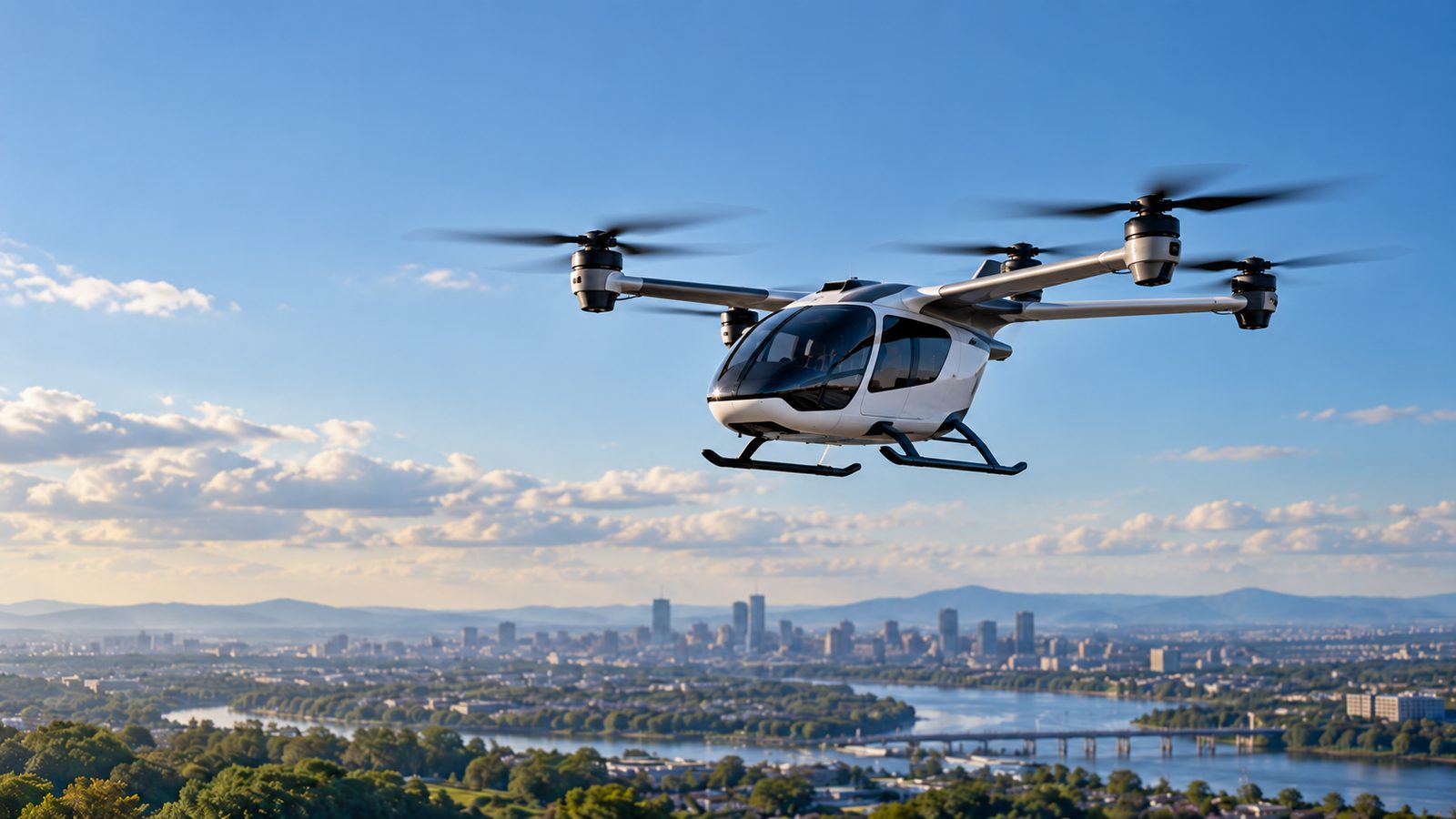
AI-based traffic management for manned and unmanned aircraft, from dynamic sectorisation and flow management to drone safety and vertiport networks.

  • Dynamic sectorisation
  • Flow management
  • Drone safety
  • Vertiport planning

Logistics & Freight Transport

Designing and operating freight and delivery networks, from cold chains to last-mile delivery with parcel lockers and robots.

  • Last-mile delivery
  • Location-routing
  • Cold-chain supply
  • Collaborative delivery

Multi-modal Autonomous Fleets

Coordinating multi-modal fleets of autonomous vehicles with multi-agent learning, for dispatching, ridesharing and last-mile delivery.

  • Fleet dispatching
  • Same-day delivery
  • Ridesharing

Projects

Research areaDomain

Science Tokyo · 2026 – 2027

Neural dynamic programming for humanitarian logistics

Combining stochastic dual dynamic programming with meta-learning to plan relief operations at realistic scale.
Learning-augmented optimisation

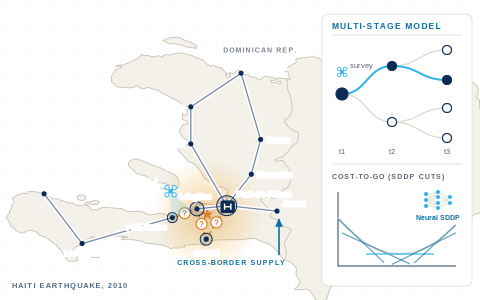
In the first hours of a disaster, what responders learn about demand, road damage and stock depends on where they send scarce survey resources such as drones, and planning under this decision-dependent uncertainty is intractable at realistic scale. This project formulates relief logistics as a multi-stage, distributionally robust stochastic programme, solves it with stochastic dual dynamic programming (SDDP), and uses Neural SDDP to learn value-function approximations across related disaster scenarios and warm-start the solver. The methods will be tested on relief networks based on the 2010 Haiti earthquake and a Japanese earthquake case.

Partners: Institute of Science Tokyo (Dr Riki Kawase)
Sabancı University · 2026 – 2027

Human behaviour and human-drone interaction in disaster response

Virtual-reality experiments on evacuation behaviour, and models of how drones can guide people to safety.
Evacuation behaviour

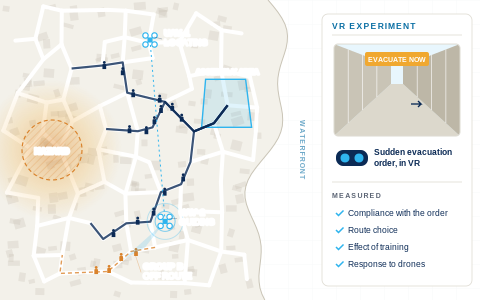
Evacuation plans rarely account for how people behave under stress, and relief models seldom capture how new information changes their decisions. This project uses virtual-reality experiments and surveys to study how people respond to sudden evacuation orders, how training affects their choices and why they deviate from safe routes. It then extends endogenous stochastic optimisation to human-drone interaction, modelling drones as multi-agent systems that locate and guide evacuees under changing conditions. The work includes the co-supervision of two PhD students and a Disaster Preparedness Workshop at Sabancı University.

Partners: Sabancı University (Prof. Raha Akhavan-Tabatabaei)
Researchers: Jacob Samuels
AIMS-Cameroon · 2024

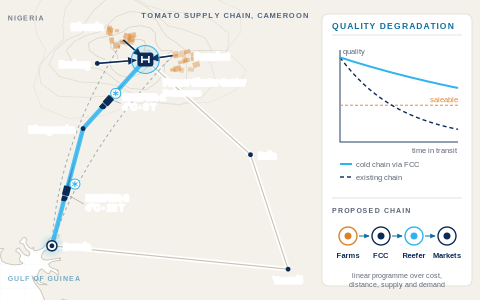
Cold-chain optimisation of food supply chains in Cameroon

Optimising tomato supply chains in Cameroon with a farmer cluster centre and cold chains, to cut losses and support food security.
Food supply chains

Perishable produce from smallholder farms loses quality quickly, and fragmented transport adds cost for farmers and traders. This project, a collaboration with AIMS Cameroon, redesigns the tomato supply chain from the Western Highlands (Foumbot and Mbouda) around a Farmer Cluster Center in Bafoussam, where farmers pool their produce before refrigerated transport to markets in Douala. A linear programming model allocates flows given transport costs, distances, supply and demand, with a quality degradation model that accounts for time, initial quality and temperature. Compared with the existing chain, the proposed design improved product quality and lowered costs.

Partners: African Institute for Mathematical Sciences (AIMS) Cameroon (Dr Daniel Tcheutia, Dr Aurelien Junior Noupelah)
  • Food supply chains optimization considering cold-chains and food security (2024, AIMS Cameroon MSc essay; Chilonga)
ICON · 2022 – 2024

Simulation of civil aviation networks and air traffic control

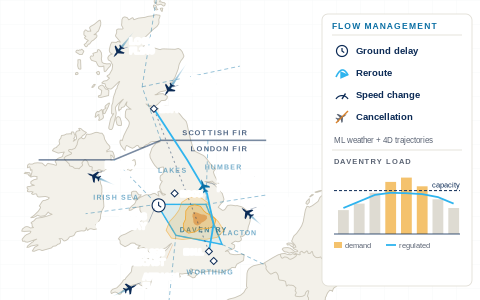
An agent-based simulation of air traffic networks and their control under disruption, tested on UK airspace.
Air traffic management

Weather and other disruptions force air traffic managers to rebalance demand and capacity across a whole network. This project built a modular, agent-based simulation of a civil aviation network and its control, combining machine-learning wind and convective weather prediction, 4D trajectory planning and a trajectory prediction model. Around this core it evaluated dynamic airspace sectorisation and developed an air traffic flow management model that assigns delays, reroutes, speed changes and cancellations, using UK airspace (the London and Scottish flight information regions) as the test case.

Researchers: Wenxuan Wang
2023

Vertiport network design for urban air mobility

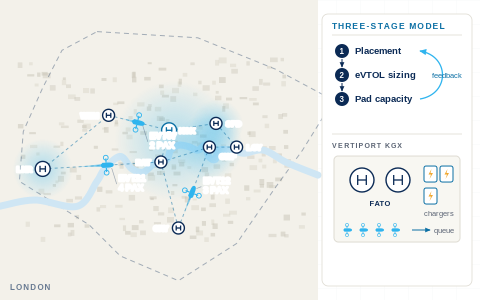
An integrated model for vertiport placement, eVTOL sizing and vertiport capacity, applied to London.
Urban air mobility

Where to place vertiports, how to size electric air taxis and how much infrastructure each vertiport needs are interlinked decisions that are usually taken separately. This project combines them in a three-stage model with a feedback loop, using queuing theory to size take-off, landing and charging pads. Applied to a London case study, it shows that ignoring vehicle sizing and vertiport queuing can produce networks that cannot operate, and that short waiting times are key to controlling costs. A companion study linked vertiport placement to demand, combining a binary logit mode-choice model, with taxi travel times from PTV Visum, and a hub location model for airport services connecting London and nearby cities with Heathrow and Gatwick.

JSPS · 2023

Rapid evacuation of urban transport networks

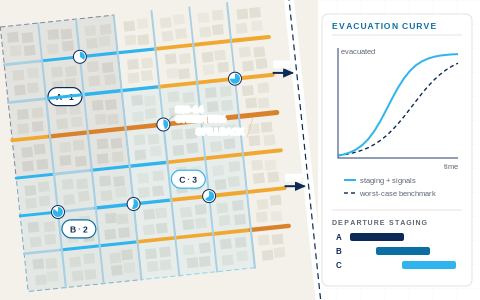
Simulation-optimisation of evacuation strategies, combining departure scheduling and traffic signal phasing.
Evacuation management

Large-scale evacuations are often held back by congestion, imperfect coordination and damaged transport networks. This project developed a hybrid simulation-optimisation method that plans evacuations through demand staging and signal phasing, evaluating policies with a dynamic traffic assignment model that captures congestion, queuing and vehicle spillback, and searching for the best strategies with derivative-free optimisation. Combining departure time scheduling with signal phasing improved evacuation efficiency over a worst-case benchmark. A follow-up study models and optimises how drones can support evacuation management.

UK CAA · 2022

Target Level of Safety for unmanned aircraft systems

Modelling to support a Target Level of Safety for beyond-visual-line-of-sight drones in UK airspace.
UAS safety

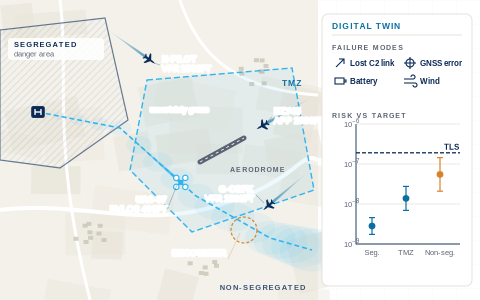
Before drones can fly beyond visual line of sight alongside manned aircraft, regulators need a target level of safety against which operations can be assessed. This study for the UK Civil Aviation Authority reviewed existing methods, classified UAS failure modes and sources of trajectory uncertainty, and proposed an agent-based digital twin of drone and manned air traffic. The approach assesses safety in segregated airspace, Transponder Mandatory Zones and non-segregated airspace.

Partners: UK Civil Aviation Authority
Researchers: Wenxuan Wang
EPSRC · 2015 – 2021

Drone-assisted humanitarian relief

Optimisation models for drone delivery of relief supplies and drone surveys of post-disaster road damage.
Humanitarian logistics

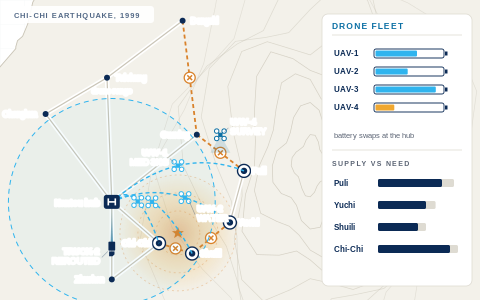
Drones can reach disaster areas quickly, but their range, battery management and fit with the wider relief supply chain limit how they are used. This project developed models that plan drone delivery of medical and relief supplies from field hubs, accounting for flight energy, battery management and fair distribution, and that coordinate drone surveys of road damage with ground relief vehicles when network conditions are uncertain. The models were tested on case studies based on the 1999 Chi-Chi earthquake in Taiwan and the 2010 Haiti earthquake.

Collaborate on research

Dr Escribano works with industry and government bodies on transport and logistics problems, through joint projects, consultancy and PhD studentships.